



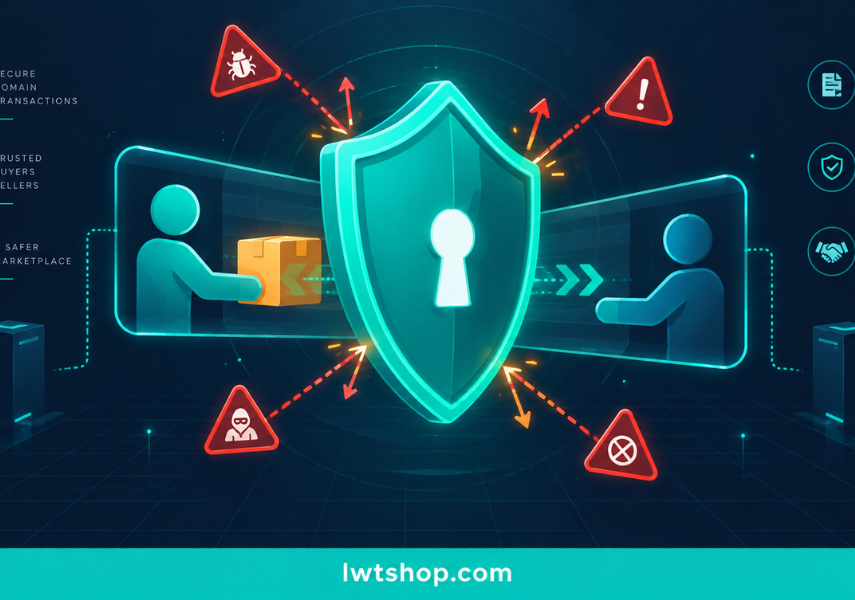
Digital assets attract fraud for structural reasons. The goods are intangible, the parties are usually strangers in different countries, the transfer is irreversible in ways payment is not, and the sums are large enough to be worth stealing but small enough that nobody is going to litigate across borders over them.
Digital assets attract fraud for structural reasons. The goods are intangible, the parties are usually strangers in different countries, the transfer is irreversible in ways payment is not, and the sums are large enough to be worth stealing but small enough that nobody is going to litigate across borders over them.
Almost every loss in this market traces back to one of a handful of patterns. Learn them, follow the verification sequence below, and use escrow without exception, and your exposure drops close to zero.
The most common fraud by a wide margin. A seller presents screenshots of earnings dashboards and analytics that have been edited, or that belong to a different property entirely. Browser developer tools make editing an on-screen number trivial, and the resulting screenshot is indistinguishable from a real one.
The counter is simple: never accept screenshots as proof of anything. Require a live screenshare where the seller navigates while you direct, or independent read-only access to the underlying accounts.
A seller drives paid or artificial traffic for the weeks before listing, so the analytics show an encouraging upward curve. After the sale, traffic reverts to its real baseline.
Look at the twelve-month picture, not the last sixty days. Check traffic sources for anything unusual, and be sceptical of growth that starts suspiciously close to the listing date.
A site that has been penalised, or is carrying a manual action, can still show reasonable historical figures while its future is already compromised. Ask directly for Search Console access and check the manual actions report yourself rather than accepting a verbal assurance.
A seller lists an asset belonging to someone else, using publicly visible data to make the listing convincing. Verify control, not existence: have the seller make a small, specific change you request — a line of text in a page footer, a temporary DNS record — while you watch. Anyone can screenshot a website; only the owner can edit it on demand.
Specific to social accounts. The transfer completes, funds release, and weeks later the seller uses a retained recovery path — an old email, a linked phone number, a connected login — to take the account back. This is covered in more detail in our guide to buying a Pinterest account.
The buyer pays through a reversible method, receives the asset, then files a chargeback or dispute. The seller loses both the asset and the money. This is why reversible payment methods are dangerous for sellers in a way they are not for ordinary online purchases — the goods cannot be recovered.
A "buyer" requests your full keyword list, top-performing pages, backlink profile and content strategy, then disappears. They were never buying; they were researching a competitor.
Share aggregate figures freely and detailed page-level data only after a buyer has demonstrated seriousness. Read-only analytics access for a defined window is safer than exported files.
The buyer proposes an escrow service, sends a link, and the "escrow site" is theirs. The seller sees a convincing deposit confirmation, transfers the asset, and the money never existed.
Never use an escrow service proposed by the other party through a link. Use the escrow built into the marketplace you are transacting on, or navigate to a well-known escrow provider by typing its address yourself.
The buyer pays a portion, takes control of the asset "to verify", then renegotiates from a position where they already hold it. Never transfer control against partial payment.
Work through these in order. Each step should pass before you spend time on the next.
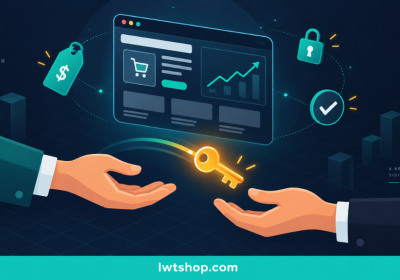
Escrow exists to solve a genuine deadlock. The seller will not transfer before payment. The buyer will not pay before transfer. Without a neutral third party, one side must take on the entire risk.
The process is straightforward. The buyer deposits with the escrow service, which confirms receipt to both parties. The seller transfers the asset. The buyer verifies within an agreed inspection period. Funds release. If verification fails, there is a defined dispute process instead of a lost asset.
The inspection period matters and is often set too short. For a website, a few days to confirm files, database, domain and account access. For a social account, longer — a week of uninterrupted access under your own credentials is reasonable, because the recovery risk does not surface immediately.
Escrow fees are small relative to the sums at risk, and paying them is the cheapest insurance available in this market.
The most common move preceding a loss is a request to take the transaction off-platform — to move to direct messaging, to skip the marketplace's escrow, to pay directly and "save the fees".
That request is not about fees. Off-platform, there is no escrow, no transaction record, no dispute process and no recourse. The saving is a few percent; the exposure is everything.
Whatever marketplace you use, keep negotiation, payment and transfer records inside it. If a dispute arises later, that record is the only evidence anyone can act on.
Yes. Fraud is not limited to large transactions, and losing a smaller amount still means losing it entirely. The fee is proportional; the protection is not optional.
You cannot, reliably. That is the point — screenshots should be treated as illustrative only. Require live verification instead.
A live screenshare where you direct the navigation is a reasonable compromise. Refusal of both is a reason to end the conversation.
If the deal went through escrow on a marketplace, there is a dispute process and a realistic prospect of recovery. If it went through direct payment to a stranger overseas, recovery is unlikely. This asymmetry is the whole argument for escrow.
Every transaction on LWT Shop runs through escrow, with a dispute and reporting process built in. Browse listings for websites, domains and social accounts.

 English
 Login